


Distilled water
High-purity water is collected from a separate distilled-water outlet for daily use.
BiAGUA brings greater everyday value to sunlight. By combining solar distillation with domestic water heating, it uses the same collected solar heat in sequence for purification and heating. Powered by sunlight alone, it produces distilled water and hot water in one system, meeting two of our most basic and important water needs. BiAGUA also offers a practical way to reduce dependence on plastics in everyday water use. Glass and stainless steel form its main distillation path, reducing contact between water and plastic components. Its core purification process requires no filter cartridges, reverse-osmosis membranes, or antiscaling chemicals, reducing reliance on plastic filter housings, membrane assemblies, and replacement consumables. Producing pure water at home can also reduce purchases of bottled water and large water containers, along with the plastic packaging and transport they require. With inverted evacuated glass tubes and an ingenious passive design, BiAGUA separates and collects water through evaporation and condensation. Its purification capability does not depend on the remaining capacity of a filter cartridge. Under suitable sunlight and feedwater conditions, with normal maintenance, it can continue producing distilled-quality pure water while recovering condensation heat to provide domestic hot water, reducing the need for external energy in purification and heating. BiAGUA’s significance goes beyond adding another solar product: it changes how clean water is obtained. By helping households depend less on purchased drinking water, plastic packaging, and replacement consumables, it strengthens water independence with lower recurring costs and resource use, making high-quality water a more convenient and affordable part of everyday life.
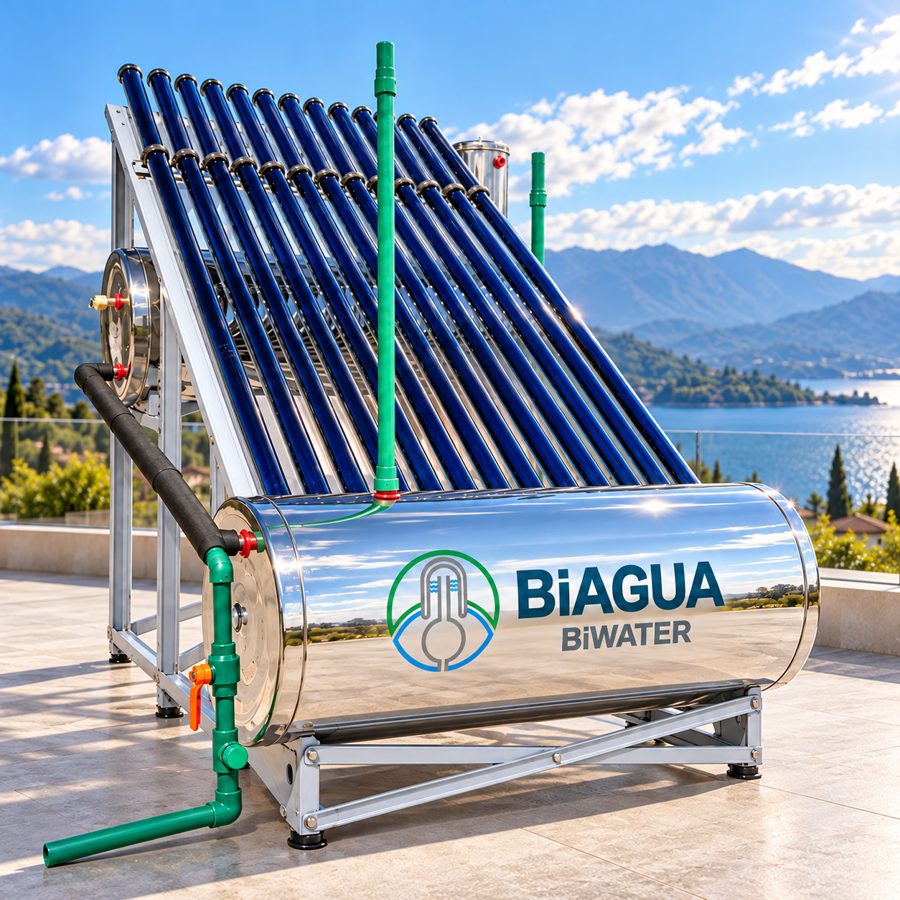
BiAGUA overcomes the limitations of conventional solar water heaters and electrical water purifiers, operating entirely at atmospheric pressure to efficiently produce distilled water and domestic hot water at the same time.
High-purity water is collected from a separate distilled-water outlet for daily use.
Recovered condensation heat helps warm domestic water for bathing, washing and cleaning.
Solar heat supplies both outputs, reducing dependence on purchased water and conventional water-heating energy.
A passive solar process reduces energy demand and disposable purification consumables.

Evacuated glass tubes capture sunlight and generate vapor. Stainless-steel conduits guide the vapor down to a condenser inside the insulated water tank. As distilled water forms, condensation heat is recovered to warm the surrounding domestic water. The two products leave through separate outlets.
Operating at atmospheric pressure, BiAGUA uses natural solar heating, evaporation and condensation. Its distillation process needs no electricity, filter cartridge, RO membrane, pump or anti-scaling chemical. Producing high-purity water at home can become more accessible and affordable; actual output and savings depend on local conditions.
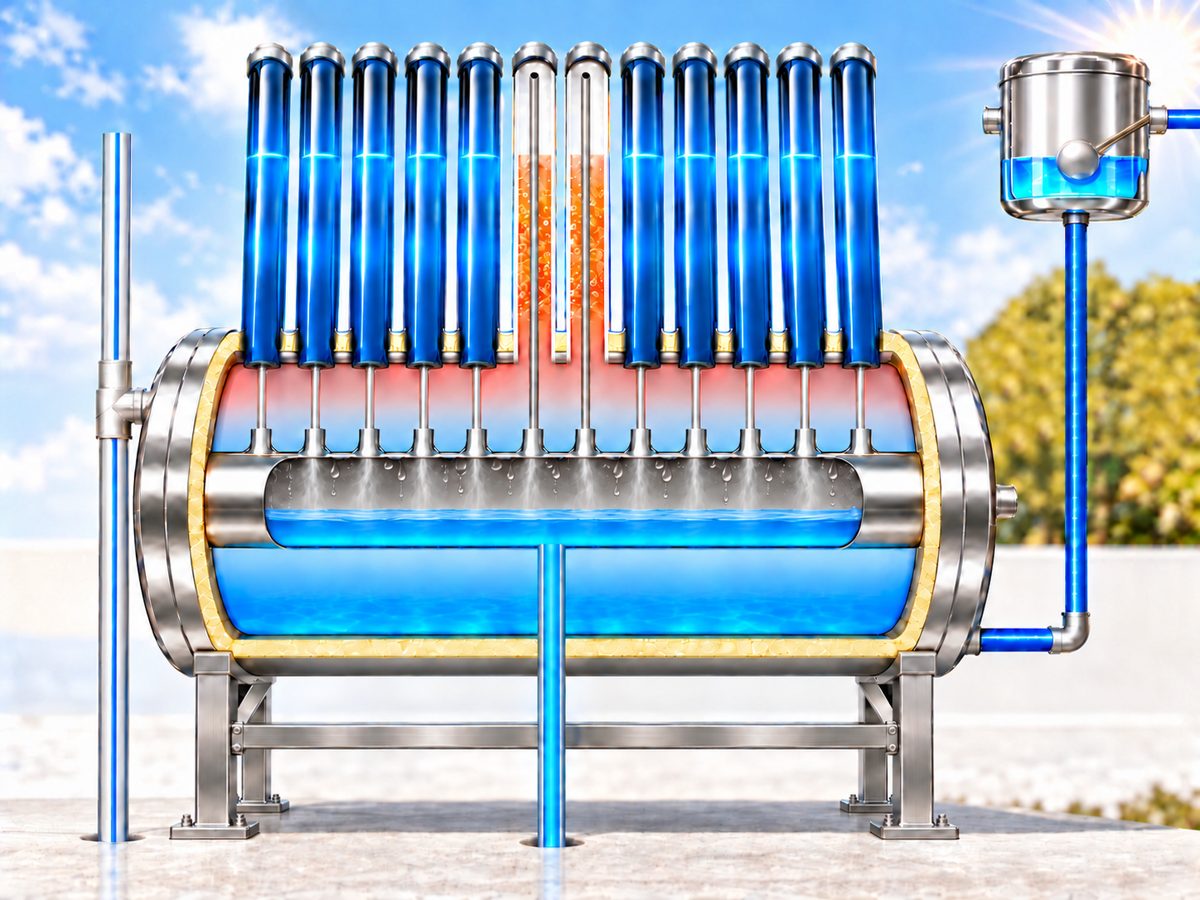
BiAGUA Configuration and Operating Principle BiAGUA brings solar distillation and domestic water heating together in one compact, passive system. Its principal components are inverted evacuated glass tubes, stainless steel vapor conduits, an internal condenser, a thermally insulated hot water tank, and an elevated makeup tank. Water Supply and Level Control The elevated makeup tank supplies water by gravity and maintains the operating water level in the upper portion of the evacuated glass tubes. Above the water surface, the closed upper end of each tube provides a cylindrical steam chamber. A vent and overflow connection at the middle of the condenser allows the system to breathe as the water level changes. During filling, rising water displaces air from the glass tubes through the vapor conduits into the condenser, where it escapes through the vent. When the water level falls, air returns through the same passage to occupy the space above the water. Depending on operating conditions, the vent may discharge air, water vapor, or a mixture of both. This connection also provides an outlet for excess distilled water. By limiting the liquid level inside the condenser, it helps prevent accumulated water from obstructing the vapor inlets. Solar Heating and Vapor Flow Sunlight absorbed by the evacuated tubes heats the water inside them, causing evaporation. The vapor collects in the steam chambers above the water surface. As vapor accumulates, a slight pressure builds up relative to the condenser, driving it into the open inlets of the vapor conduits and downward into the condenser. Each conduit inlet is positioned near the top of its steam chamber, above the operating water level. The space between the water surface and the inlet allows liquid droplets to separate from the vapor. Adequate chamber height helps reduce the carryover of splashes and droplets containing dissolved impurities, contributing to the purity of the collected distilled water. Condensation and Heat Recovery Inside the condenser, vapor transfers heat through the stainless steel wall to the surrounding domestic water. As it releases this heat, the vapor condenses into liquid water, which is collected separately. Distilled water and domestic hot water leave the system through separate outlets, keeping the two water streams apart. These processes occur in a coordinated sequence within a highly insulated thermal boundary. The vacuum insulation of the glass tubes and the insulation surrounding the tank reduce heat loss to the environment. Heat can also pass from the vapor conduits to the surrounding water inside the glass tubes wherever a temperature difference permits. This internal heat transfer helps retain energy within the system and can contribute to further evaporation. In the condenser, the heat released during condensation is recovered for domestic water heating. One Solar Input, Two Useful Outputs BiAGUA uses collected solar heat first to evaporate water, then recovers heat from the condensing vapor to warm domestic water. Distillation separates water from dissolved salts and other nonvolatile impurities, while heat recovery gives the same energy a further useful purpose. Through this integration, one solar input provides two useful outputs: distilled water and domestic hot water. The core process operates passively, without electric pumps, filter cartridges, or reverse-osmosis membranes.
Sunlight heats water in the evacuated glass tubes.
Water evaporates; vapor gathers above the water level.
Stainless-steel conduits carry vapor to the condenser.
Vapor forms distilled water as its released heat warms the tank.
Collect distilled water and draw domestic hot water from separate outlets.
One passive solar technology supports household hot water and produces distilled water. Explore the design choices behind efficiency, simpler maintenance and a lower-plastic-contact water path.
Solar heat first generates vapor; condensation heat then contributes to warming domestic water.
Vapor condensation separates many dissolved salts and non-volatile substances from water. Test output before claiming drinking-water suitability.
The distillation process has no filter cartridge, RO membrane or anti-scaling chemical to replace.
Atmospheric-pressure operation and a vapor path without an external pump support simpler maintenance.
Glass tubes, stainless-steel vapor conduits and a stainless-steel condenser minimize plastic contact in the principal water-production path.
Compare six tube configurations and indicative daily production. Output depends on sunlight, climate, inlet-water temperature and operating conditions.
| Model | Tubes | Distilled water L/day | Hot water L/day | CO₂ avoided kg/year* |
|---|---|---|---|---|
| SD-12/1800-6/120 | 12 | 4–8 | 120 | 591 |
| SD-15/1800-7.5/150 | 15 | 5–10 | 150 | 739 |
| SD-20/1800-10/200 | 20 | 7–13 | 200 | 986 |
| SD-24/1800-12/240 | 24 | 8–16 | 240 | 1,183 |
| SD-30/1800-15/300 | 30 | 10–20 | 300 | 1,478 |
*Results depend on solar radiation, climate, inlet-water temperature, location and operating conditions.
| Model | Tubes | Distilled water L/day | Hot water L/day | CO₂ avoided kg/year* |
|---|---|---|---|---|
| SD-12/2100-8/160 | 12 | 8 | 160 | — |
| SD-15/2100-10/200 | 15 | 10 | 200 | — |
| SD-20/2100-13.5/270 | 20 | 13.5 | 270 | — |
| SD-24/2100-16/320 | 24 | 16 | 320 | — |
| SD-30/2100-20/400 | 30 | 20 | 400 | — |
*Results depend on solar radiation, climate, inlet-water temperature, location and operating conditions.
| Market | 19 L bottled water | Value of 3,000 L/year | 60,000 L hot-water value / year | Total value / year |
|---|---|---|---|---|
| United States | USD $6–10 | USD $950–1,580 | ≈ USD $330 | USD $1,280–1,910 |
| Europe | USD $9–18 | USD $1,420–2,840 | ≈ USD $495 | USD $1,915–3,335 |
| Middle East | USD $2.70–4.00 | USD $430–630 | ≈ USD $155 | USD $585–785 |
| South Asia | USD $1.20–2.50 | USD $190–400 | ≈ USD $155 | USD $345–555 |
| Africa | USD $1.50–6.00 | USD $240–950 | ≈ USD $270 | USD $510–1,220 |
| South America | USD $3.50–9.00 | USD $550–1,420 | ≈ USD $350 | USD $900–1,770 |
Hot-water values assume 60,000 L/year heated from 20°C to 45°C at 90% efficiency. The total adds the value of 3,000 L/year of distilled water, estimated using 19 L bottled-water reference prices, to that market's hot-water estimate. These are not current quotes or projected savings; check local prices and costs.
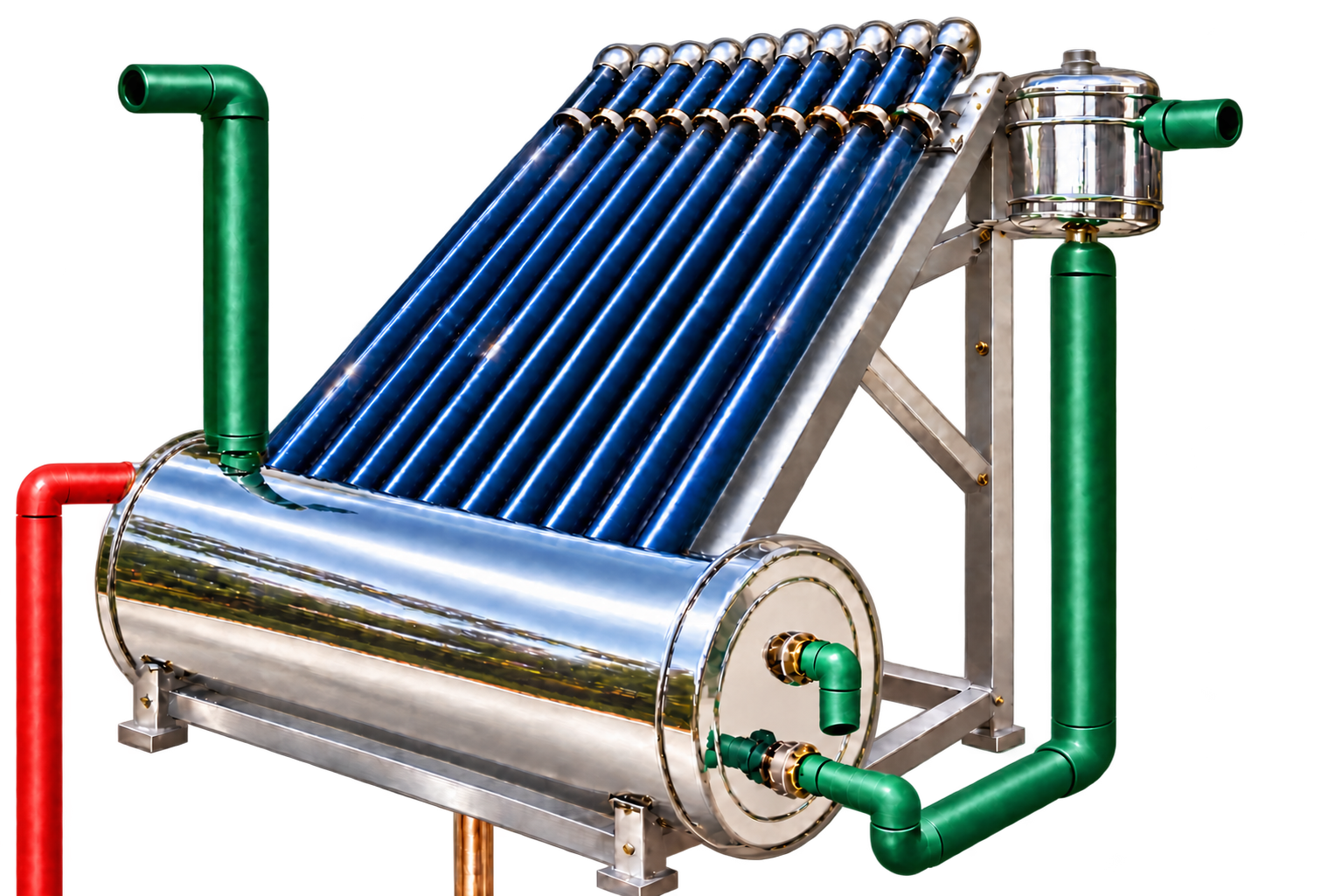
BiAGUA vs Solar Water Heater 1. Greater Value from the Same Sunlight BiAGUA produces both distilled water and domestic hot water. Solar heat drives evaporation, and condensation heat is recovered for water heating—adding water purification to the everyday benefits of a solar water heater. 2. Helps Maintain Performance Over Time Downward-opening glass tubes and recurring water-level changes help loose sediment move out of the tubes and into the tank for removal. This natural flushing action helps reduce sediment accumulation and supports sustained performance. 3. Easier Integration of Freeze Protection With the glass tubes positioned above the tank, warmth from an optional electric tank heater can rise into the tubes to help protect against freezing. This arrangement helps bring protective heat to the tubes, where it is needed during cold weather. 4. Greater Water Independence, Fewer Consumables Producing distilled-quality pure water on site reduces reliance on purchased drinking water, deliveries, and plastic packaging. The core distillation process requires no filter cartridges, RO membranes, or antiscaling chemicals, helping reduce recurring purchases and waste.
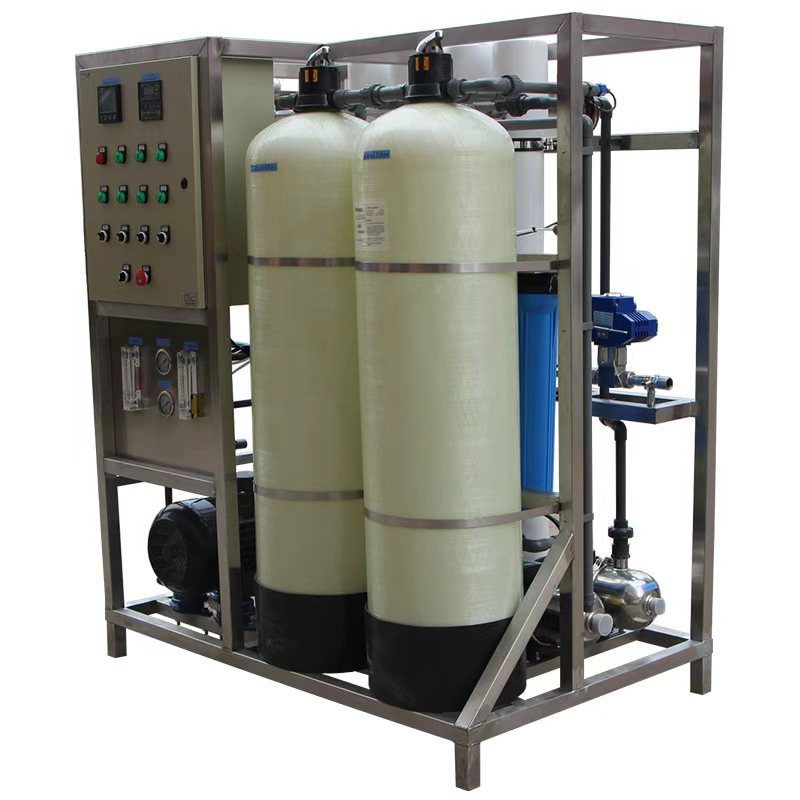
BiAGUA vs Electric Water Purifier 1. Purification Powered by Sunlight BiAGUA uses solar evaporation and condensation to produce high-purity distilled water. Its core purification process requires no electricity, motors, pumps, filter cartridges, RO membranes, or antiscaling chemicals. 2. Steam Chambers Designed for High Purity The vertical distance between the water surface and each vapor-conduit inlet provides space for liquid droplets to separate from the vapor. Adequate steam-chamber height helps reduce the carryover of splashes and droplets containing dissolved impurities, contributing to distilled-water purity. 3. Thermal Protection Against Microorganisms Thermal distillation combines heating with evaporation and condensation, providing an effective barrier against bacteria and viruses. 4. Lasting Purity Without Dependence on Filter Media BiAGUA produces high-purity distilled water through evaporation and condensation. Unlike conventional purifiers that depend on replaceable filters or RO membranes, its core purification process requires no filtration media or antiscaling chemicals. This avoids the recurring cycle of declining purification performance as filter media become saturated or exhausted, followed by recovery through cleaning or replacement. Stable high purity comes from the separation principle of distillation itself. 5. Less Contact with Plastics Glass tubes, stainless steel vapor conduits, and a stainless steel condenser reduce plastic contact along the main distillation path. Producing pure water on site also helps reduce dependence on bottled water and plastic packaging. 6. Distilled Water and Hot Water Together BiAGUA recovers the heat released during condensation to warm domestic water, while collecting distilled water separately. The same collected solar heat serves two purposes in sequence: water purification and domestic water heating. 7. Lower Recurring Costs Sunlight supplies the process energy, while the absence of replacement purification cartridges, RO membranes, and antiscaling chemicals reduces ongoing consumable expenses. On-site production also helps reduce spending on purchased drinking water and deliveries. 8. Passive Design for Long-Term Service The core process operates near atmospheric pressure without motors, pumps, or electronic control circuits. Fewer moving parts and powered components mean fewer potential failure points. 9. Quality You Can See At night or early in the morning, draw off all collected distilled water and wait for the last drops to fall, then check whether any further drops appear at the outlet. A dry outlet is a visible sign that source water is not crossing into the distilled-water path, giving you greater confidence in the system’s operation the next day. 10. Greater Everyday Independence By producing distilled-quality pure water and domestic hot water on site, BiAGUA helps households reduce dependence on electricity, replacement consumables, and purchased drinking water.
Questions about output, water quality, installation, maintenance and importing.
It produces distilled water and domestic hot water using the same solar heat input. The two water streams have separate outlets.
The reference average is about 10 litres of distilled water and 200 litres of hot water per day. Actual output varies with sunlight, climate, inlet-water temperature and use; some days produce less and others more.
Sunlight heats water inside inverted evacuated tubes. Vapor travels through stainless-steel conduits to a condenser. Condensation produces distilled water and releases heat to the domestic-water side.
The solar distillation process uses solar heat and does not require a powered pump, treatment filter cartridges or RO membranes. Any optional backup equipment has its own requirements.
Feedwater must be assessed for the intended application. Distillation does not remove every volatile chemical; collected water should be tested before drinking use.
No. Inspect the system and outlets, keep the collection path clean, and remove deposits as required by feedwater quality and operating conditions.
A sunny location, suitable structural support, the correct water supply arrangement and separate collection plumbing. Keep the condenser vent open and follow the model-specific installation instructions.
Send your country, contact details and requirements through Enquiry. Our team can discuss model selection, quantities, shipping and branding during follow-up.
A new generation of solar thermal technology that produces purified water while simultaneously providing domestic hot water, making greater use of the solar energy captured by evacuated glass tubes.
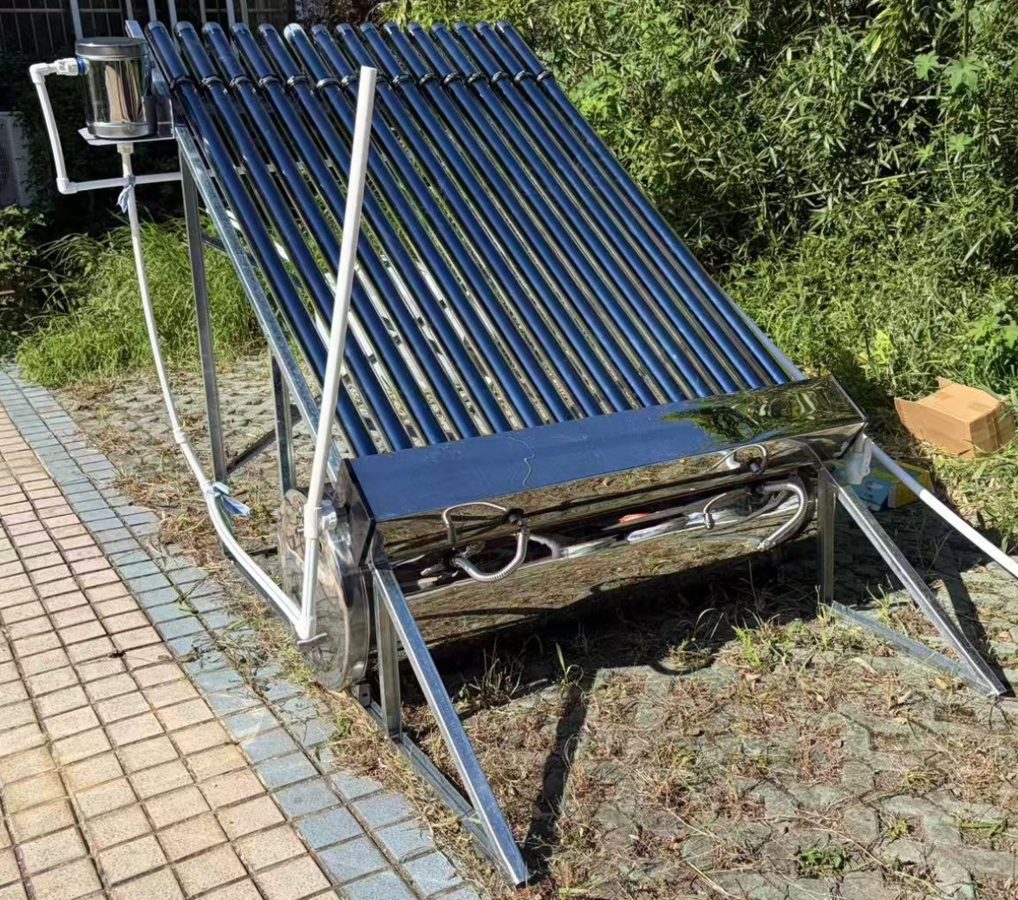
Decentralized solar desalination systems designed to produce fresh water from seawater or brackish water using solar thermal energy, reducing dependence on electricity-intensive desalination equipment and disposable treatment consumables.
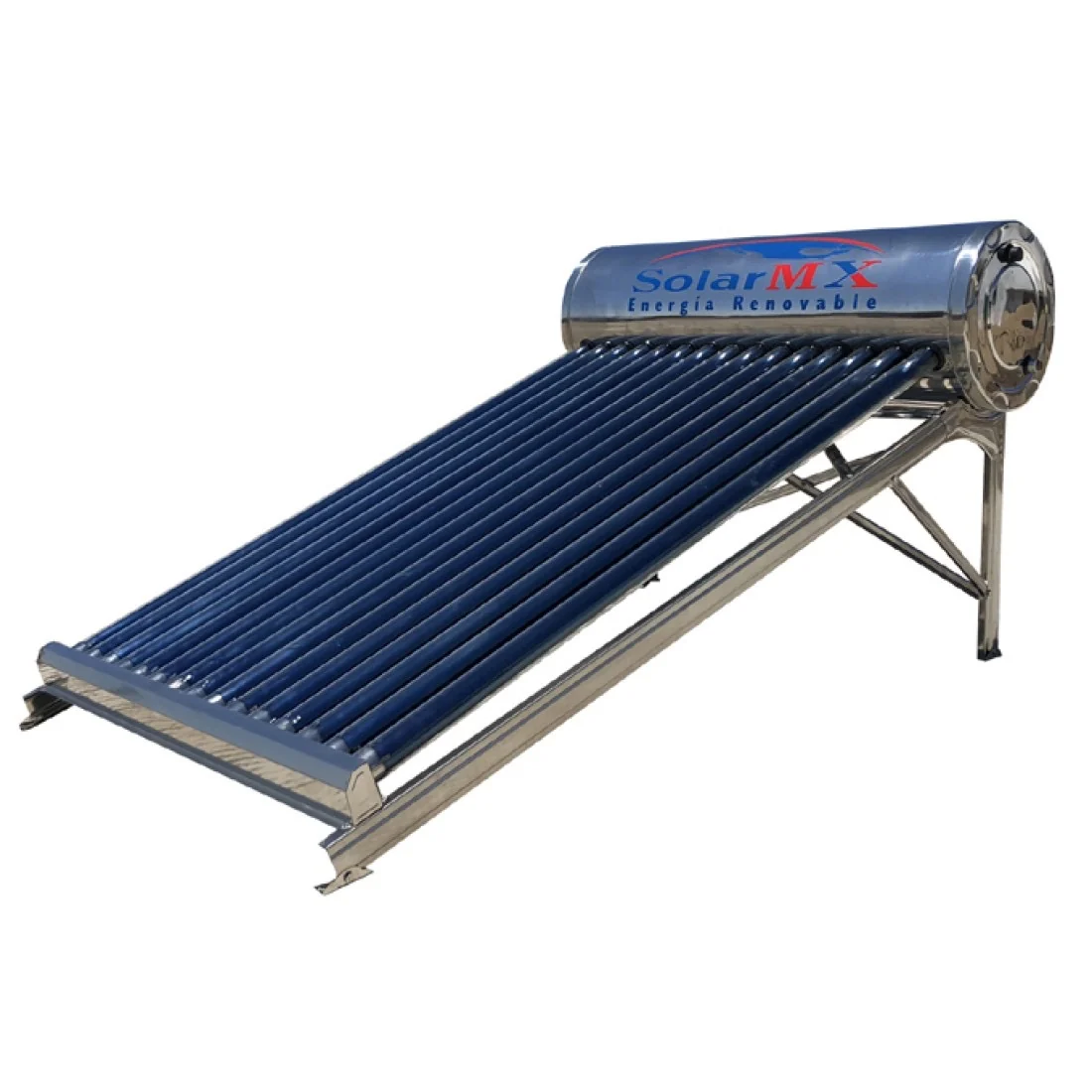
Reliable solar water heating systems that convert solar radiation directly into useful hot water for residential, commercial and institutional applications, reducing conventional energy consumption and operating costs.
SolarBridge works with distributors, installers, project developers and manufacturing partners around the world.
Contact SolarBridge
We specialize in the design and manufacturing of advanced solar thermal products, with strong expertise in pre-heat exchanging solar water heaters for residential, commercial, and industrial applications. We are also the developer of Solar BiAGUA solar distillation water heaters with multi-country patents, which will also be applied to solar desalination. Our vision is: “Wherever there is sunlight and sea water, there will be sufficient clean water.”