


Distilled water
High-purity water is collected from a separate distilled-water outlet for daily use.
BiAGUA memperkenalkan cara inovatif untuk memanfaatkan cahaya matahari bagi menangani salah satu cabaran terpenting manusia: akses kepada air minuman yang bersih. Dengan hanya menggunakan tenaga suria, BiAGUA menghasilkan air suling dan air panas, memenuhi dua keperluan harian melalui satu sistem. Melalui penggunaan inovatif tiub kaca vakum terbalik dan reka bentuk pasif yang bijak, BiAGUA hanya menggunakan tenaga suria untuk menghasilkan air suling dan air panas. Fungsinya melangkaui pemanasan air, dengan menjadikan air tulen yang mempunyai tahap ketulenan setanding air suling lebih mudah diperoleh dan lebih mampu milik. Dengan mengurangkan kebergantungan pada pembelian air dan penggantian penapis, BiAGUA berhasrat menyokong kehidupan yang lebih sihat serta meningkatkan keupayaan komuniti di seluruh dunia untuk memenuhi keperluan air mereka sendiri.
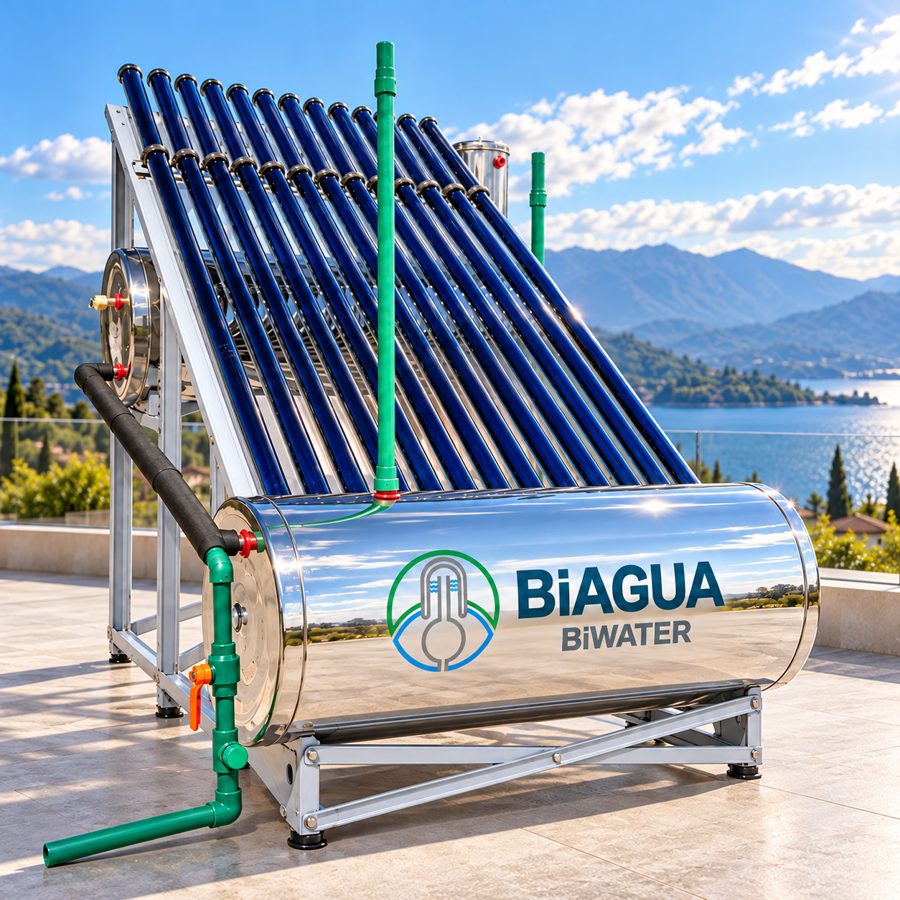
BiAGUA overcomes the limitations of conventional solar water heaters and electrical water purifiers, operating entirely at atmospheric pressure to efficiently produce distilled water and domestic hot water at the same time.
High-purity water is collected from a separate distilled-water outlet for daily use.
Recovered condensation heat helps warm domestic water for bathing, washing and cleaning.
Solar heat supplies both outputs, reducing dependence on purchased water and conventional water-heating energy.
A passive solar process reduces energy demand and disposable purification consumables.
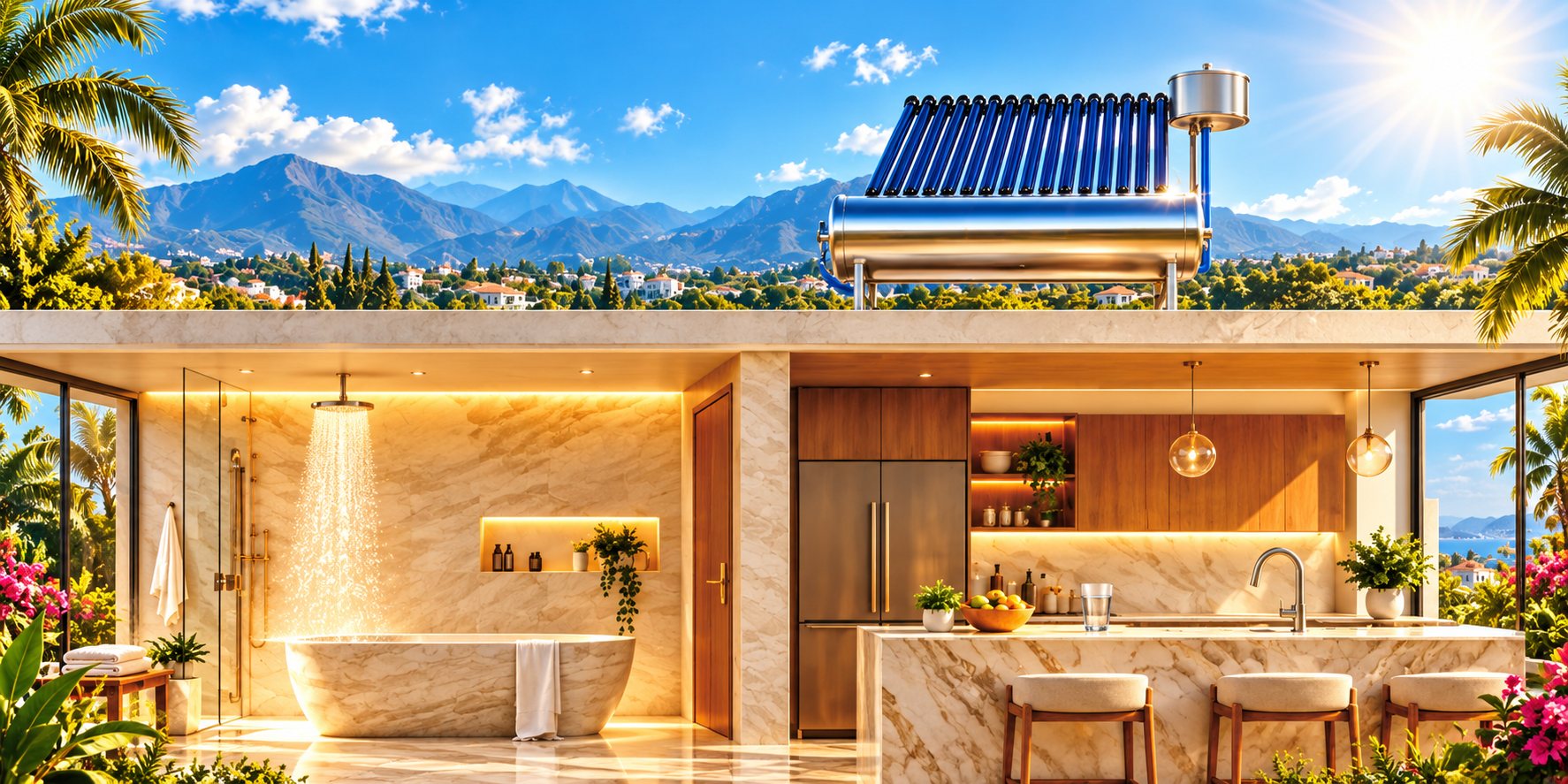
Evacuated glass tubes capture sunlight and generate vapor. Stainless-steel conduits guide the vapor down to a condenser inside the insulated water tank. As distilled water forms, condensation heat is recovered to warm the surrounding domestic water. The two products leave through separate outlets.
Operating at atmospheric pressure, BiAGUA uses natural solar heating, evaporation and condensation. Its distillation process needs no electricity, filter cartridge, RO membrane, pump or anti-scaling chemical. Producing high-purity water at home can become more accessible and affordable; actual output and savings depend on local conditions.
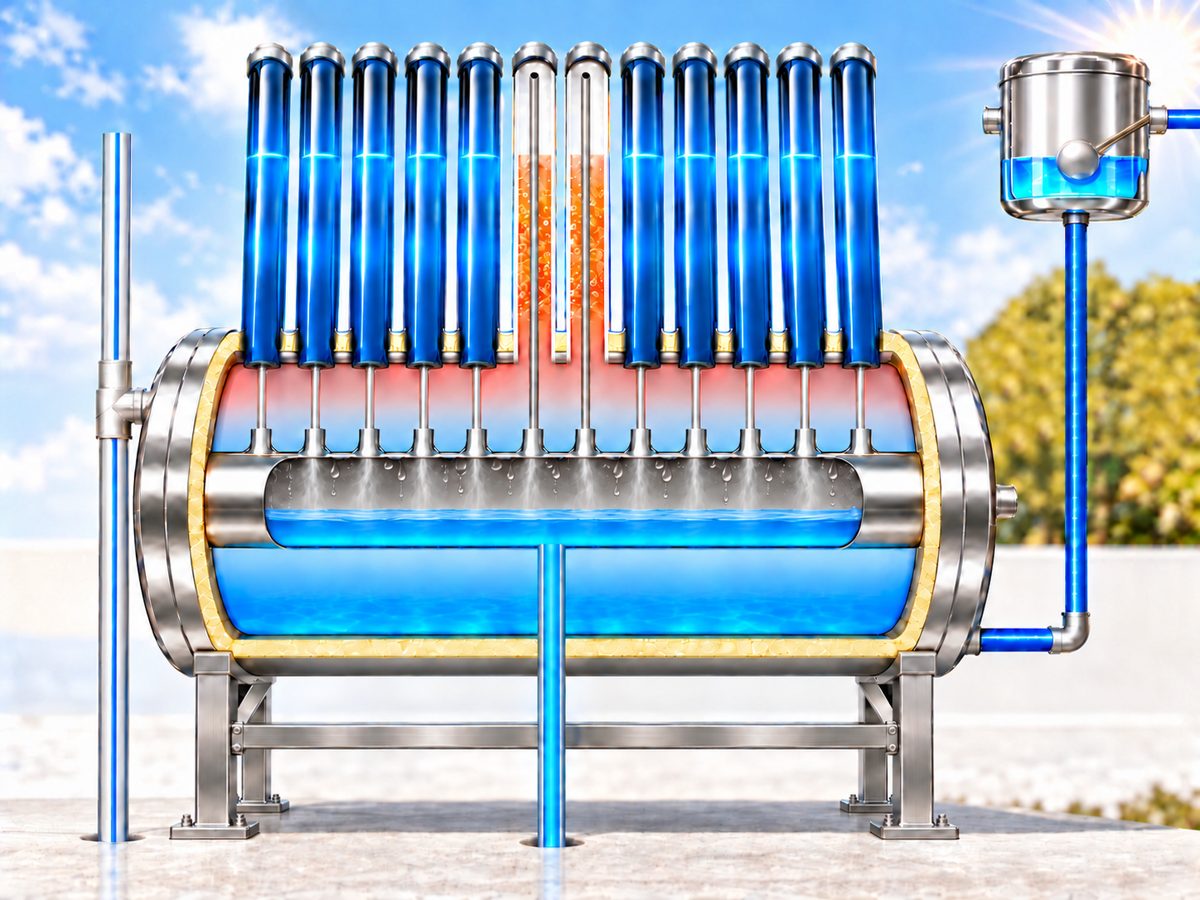
Konfigurasi dan Prinsip Operasi BiAGUA BiAGUA menggabungkan penyulingan suria dan pemanasan air domestik dalam satu sistem yang padat dan pasif. Komponen utamanya ialah tiub kaca vakum terbalik, saluran wap keluli tahan karat, pemeluwap dalaman, tangki air panas berpenebat haba dan tangki bekalan air tambahan yang diletakkan lebih tinggi. Bekalan Air dan Kawalan Paras Tangki bekalan air tambahan yang lebih tinggi membekalkan air secara graviti dan mengekalkan paras operasi air di bahagian atas tiub kaca vakum. Di atas permukaan air, hujung atas setiap tiub yang tertutup membentuk kebuk wap berbentuk silinder. Sambungan pengudaraan dan limpahan di bahagian tengah pemeluwap membolehkan pertukaran udara apabila paras air berubah. Semasa pengisian, air yang naik menolak udara dari tiub kaca melalui saluran wap ke pemeluwap, lalu keluar melalui liang pengudaraan. Apabila paras air menurun, udara kembali melalui laluan yang sama untuk mengisi ruang di atas air. Bergantung pada keadaan operasi, liang ini boleh melepaskan udara, wap air atau campuran kedua-duanya. Sambungan ini juga menjadi saluran keluar bagi air suling berlebihan. Dengan mengehadkan paras cecair di dalam pemeluwap, sambungan ini membantu mengelakkan air yang terkumpul daripada menghalang salur masuk wap. Pemanasan Suria dan Aliran Wap Sinaran suria yang diserap oleh tiub vakum memanaskan air di dalamnya, lalu menyebabkan penyejatan. Wap terkumpul dalam kebuk di atas permukaan air. Apabila wap terkumpul, tekanan yang sedikit lebih tinggi berbanding pemeluwap terbentuk, lalu menolak wap ke bukaan salur masuk dan turun melalui saluran wap ke pemeluwap. Salur masuk setiap saluran terletak berhampiran bahagian paling atas kebuk wap, di atas paras operasi air. Ruang antara permukaan air dengan salur masuk membolehkan titisan cecair terpisah daripada wap. Ketinggian kebuk yang mencukupi membantu mengurangkan percikan dan titisan yang mengandungi bendasing terlarut daripada terbawa bersama wap, sekali gus menyumbang kepada ketulenan air suling yang dikumpulkan. Pemeluwapan dan Pemulihan Haba Di dalam pemeluwap, wap memindahkan haba melalui dinding keluli tahan karat kepada air domestik di sekelilingnya. Apabila haba dilepaskan, wap memeluwap menjadi air cecair yang dikumpulkan secara berasingan. Air suling dan air panas domestik keluar melalui saluran berasingan, memastikan kedua-dua aliran air kekal terpisah. Proses-proses ini berlaku mengikut urutan yang terselaras dalam sempadan terma berpenebat tinggi. Penebat vakum pada tiub kaca dan penebat di sekeliling tangki mengurangkan kehilangan haba ke persekitaran. Haba juga boleh mengalir daripada saluran wap kepada air di sekelilingnya dalam tiub kaca apabila perbezaan suhu membenarkannya. Pemindahan haba dalaman ini membantu mengekalkan tenaga dalam sistem dan boleh menyumbang kepada penyejatan selanjutnya. Di dalam pemeluwap, haba yang dibebaskan semasa pemeluwapan dipulihkan untuk memanaskan air domestik. Satu Input Tenaga Suria, Dua Hasil Berguna BiAGUA menggunakan haba suria yang dikumpulkan untuk menyejatkan air terlebih dahulu, kemudian memulihkan haba daripada wap yang memeluwap bagi memanaskan air domestik. Penyulingan memisahkan air daripada garam terlarut dan bendasing tidak meruap yang lain, manakala pemulihan haba memberikan kegunaan tambahan kepada tenaga yang sama. Melalui penyepaduan ini, satu input tenaga suria menghasilkan dua keluaran berguna: air suling dan air panas domestik. Proses teras beroperasi secara pasif, tanpa pam elektrik, kartrij penapis atau membran osmosis songsang.
Sunlight heats water in the evacuated glass tubes.
Water evaporates; vapor gathers above the water level.
Stainless-steel conduits carry vapor to the condenser.
Vapor forms distilled water as its released heat warms the tank.
Collect distilled water and draw domestic hot water from separate outlets.
One passive solar technology supports household hot water and produces distilled water. Explore the design choices behind efficiency, simpler maintenance and a lower-plastic-contact water path.
Solar heat first generates vapor; condensation heat then contributes to warming domestic water.
Vapor condensation separates many dissolved salts and non-volatile substances from water. Test output before claiming drinking-water suitability.
The distillation process has no filter cartridge, RO membrane or anti-scaling chemical to replace.
Atmospheric-pressure operation and a vapor path without an external pump support simpler maintenance.
Glass tubes, stainless-steel vapor conduits and a stainless-steel condenser minimize plastic contact in the principal water-production path.
Compare six tube configurations and indicative daily production. Output depends on sunlight, climate, inlet-water temperature and operating conditions.
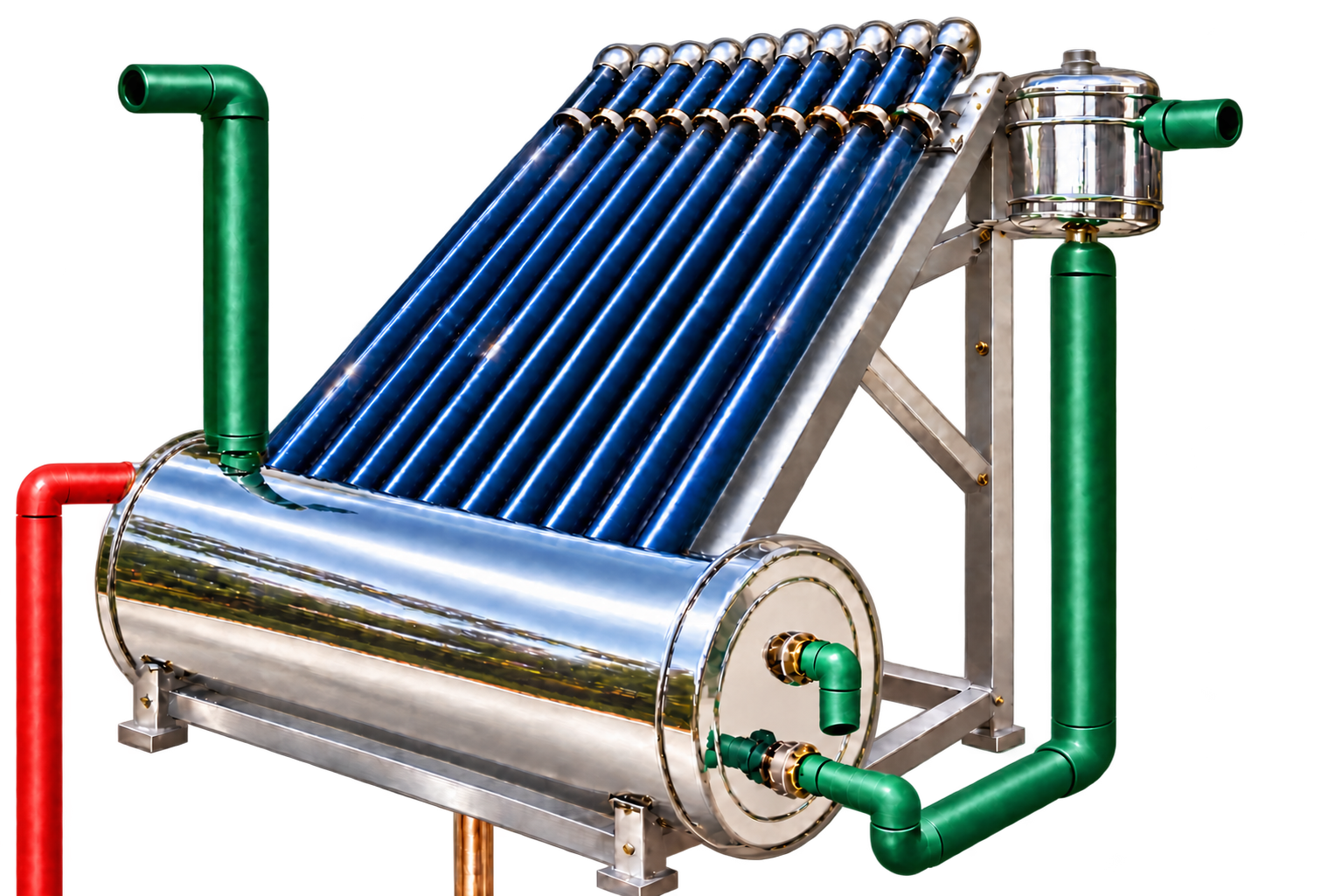
| Model | Tubes | Distilled water L/day | Hot water L/day | CO₂ avoided kg/year* |
|---|---|---|---|---|
| SD-12/1800-6/120 | 12 | 4–8 | 120 | 591 |
| SD-15/1800-7.5/150 | 15 | 5–10 | 150 | 739 |
| SD-18/1800-9/180 | 18 | 6–12 | 180 | 887 |
| SD-20/1800-10/200 | 20 | 7–13 | 200 | 986 |
| SD-24/1800-12/240 | 24 | 8–16 | 240 | 1,183 |
| SD-30/1800-15/300 | 30 | 10–20 | 300 | 1,478 |
*Results depend on solar radiation, climate, inlet-water temperature, location and operating conditions.
| Market | 19 L bottled water | Value of 3,000 L/year | 60,000 L hot-water value / year | Total value / year |
|---|---|---|---|---|
| United States | USD $6–10 | USD $950–1,580 | ≈ USD $330 | USD $1,280–1,910 |
| Europe | USD $9–18 | USD $1,420–2,840 | ≈ USD $495 | USD $1,915–3,335 |
| Middle East | USD $2.70–4.00 | USD $430–630 | ≈ USD $155 | USD $585–785 |
| South Asia | USD $1.20–2.50 | USD $190–400 | ≈ USD $155 | USD $345–555 |
| Africa | USD $1.50–6.00 | USD $240–950 | ≈ USD $270 | USD $510–1,220 |
| South America | USD $3.50–9.00 | USD $550–1,420 | ≈ USD $350 | USD $900–1,770 |
Hot-water values assume 60,000 L/year heated from 20°C to 45°C at 90% efficiency. The total adds the value of 3,000 L/year of distilled water, estimated using 19 L bottled-water reference prices, to that market's hot-water estimate. These are not current quotes or projected savings; check local prices and costs.
1. Greater value from sunlight — BiAGUA adds distilled-water production to solar water heating, delivering greater value from the same sunlight. 2. Helps sustain performance — Downward-opening tubes and recurring water-level changes help flush loose sediment and sustain performance, reducing buildup. 3. Easier integration of freeze protection — Tubes positioned above the tank can benefit from an optional tank heater for freeze protection. 4. Greater water independence — On-site distilled-water production also reduces dependence on purchased drinking water and its deliveries.
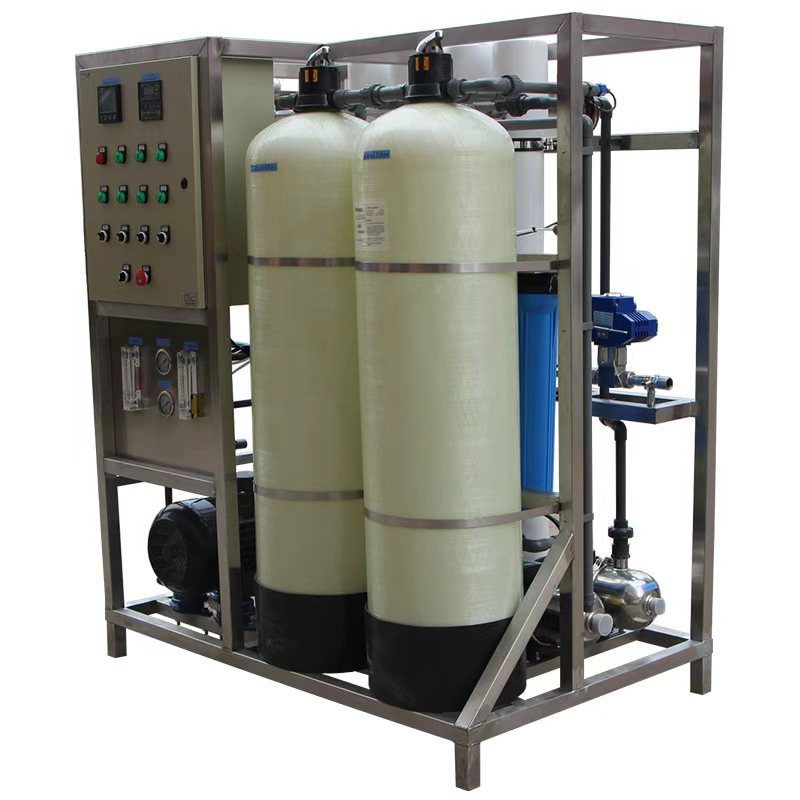
1. Purification powered by sunlight — solar evaporation and condensation produce high-purity distilled water without electricity, motors, pumps, filter cartridges, RO membranes, or antiscaling chemicals in the core process. 2. Effective microbial protection — thermal distillation provides an effective barrier against bacteria and viruses. 3. Constant High Purity without filter exhaustion — purification does not rely on cartridges that gradually become saturated. Proper operation, periodic cleaning, and hygienic collection and storage help maintain consistent water quality. 4. Less contact with plastics — glass tubes, stainless steel vapor conduits, and a stainless steel condenser minimize plastic contact along the main distillation path. 5. Distilled water plus hot water — recovered condensation heat warms domestic water, delivering two useful outputs from the same solar input. 6. Lower recurring costs — sunlight supplies process energy, while eliminating replacement purification cartridges and membranes reduces ongoing consumable expenses. 7. Built for long service life — passive operation at atmospheric pressure, without motors, pumps, or electronic control circuits in the core process, means fewer potential failure points. 8. Easy visual checking — after distillation and residual drainage stop at night or early morning, a dry outlet helps indicate that source water is not crossing into the distilled-water path, adding confidence in the next day’s production. 9. Greater independence — reduce reliance on electricity, replacement supplies, and purchased drinking water.
Questions about output, water quality, installation, maintenance and importing.
It produces distilled water and domestic hot water using the same solar heat input. The two water streams have separate outlets.
The reference average is about 10 litres of distilled water and 200 litres of hot water per day. Actual output varies with sunlight, climate, inlet-water temperature and use; some days produce less and others more.
Sunlight heats water inside inverted evacuated tubes. Vapor travels through stainless-steel conduits to a condenser. Condensation produces distilled water and releases heat to the domestic-water side.
The solar distillation process uses solar heat and does not require a powered pump, treatment filter cartridges or RO membranes. Any optional backup equipment has its own requirements.
Feedwater must be assessed for the intended application. Distillation does not remove every volatile chemical; collected water should be tested before drinking use.
No. Inspect the system and outlets, keep the collection path clean, and remove deposits as required by feedwater quality and operating conditions.
A sunny location, suitable structural support, the correct water supply arrangement and separate collection plumbing. Keep the condenser vent open and follow the model-specific installation instructions.
Send your country, contact details and requirements through Enquiry. Our team can discuss model selection, quantities, shipping and branding during follow-up.
A new generation of solar thermal technology that produces purified water while simultaneously providing domestic hot water, making greater use of the solar energy captured by evacuated glass tubes.
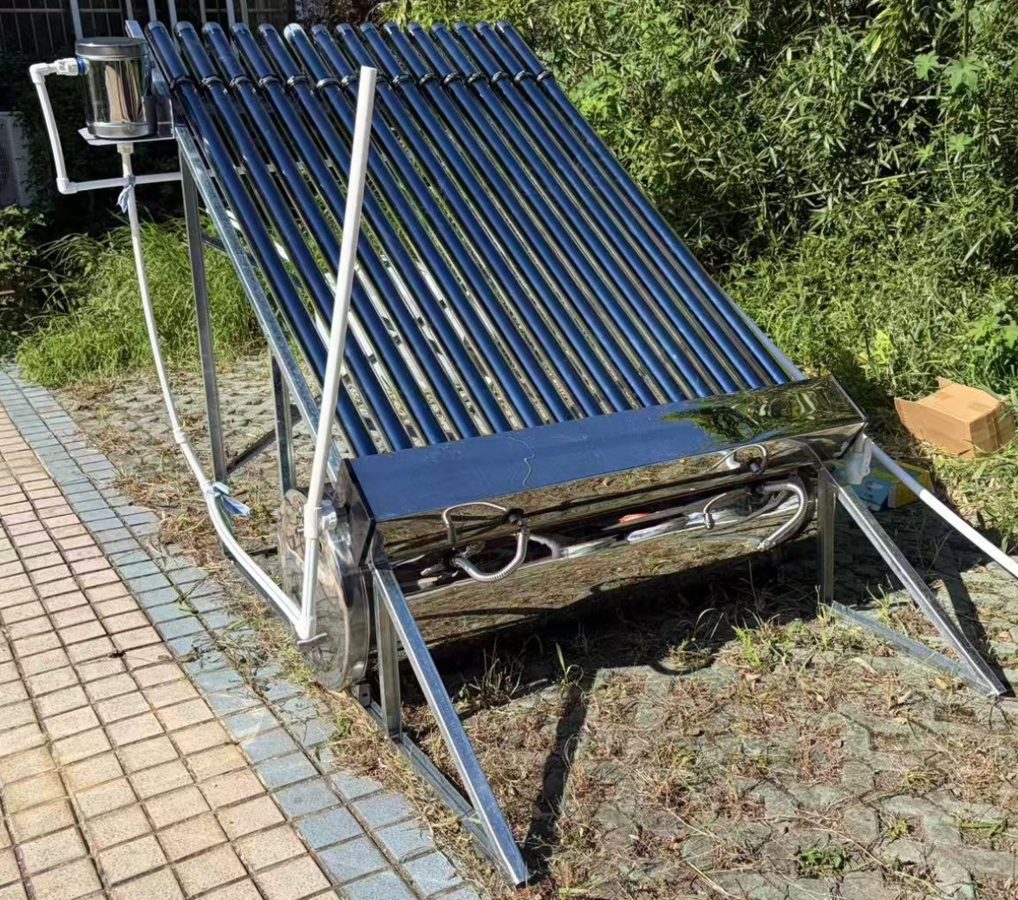
Decentralized solar desalination systems designed to produce fresh water from seawater or brackish water using solar thermal energy, reducing dependence on electricity-intensive desalination equipment and disposable treatment consumables.
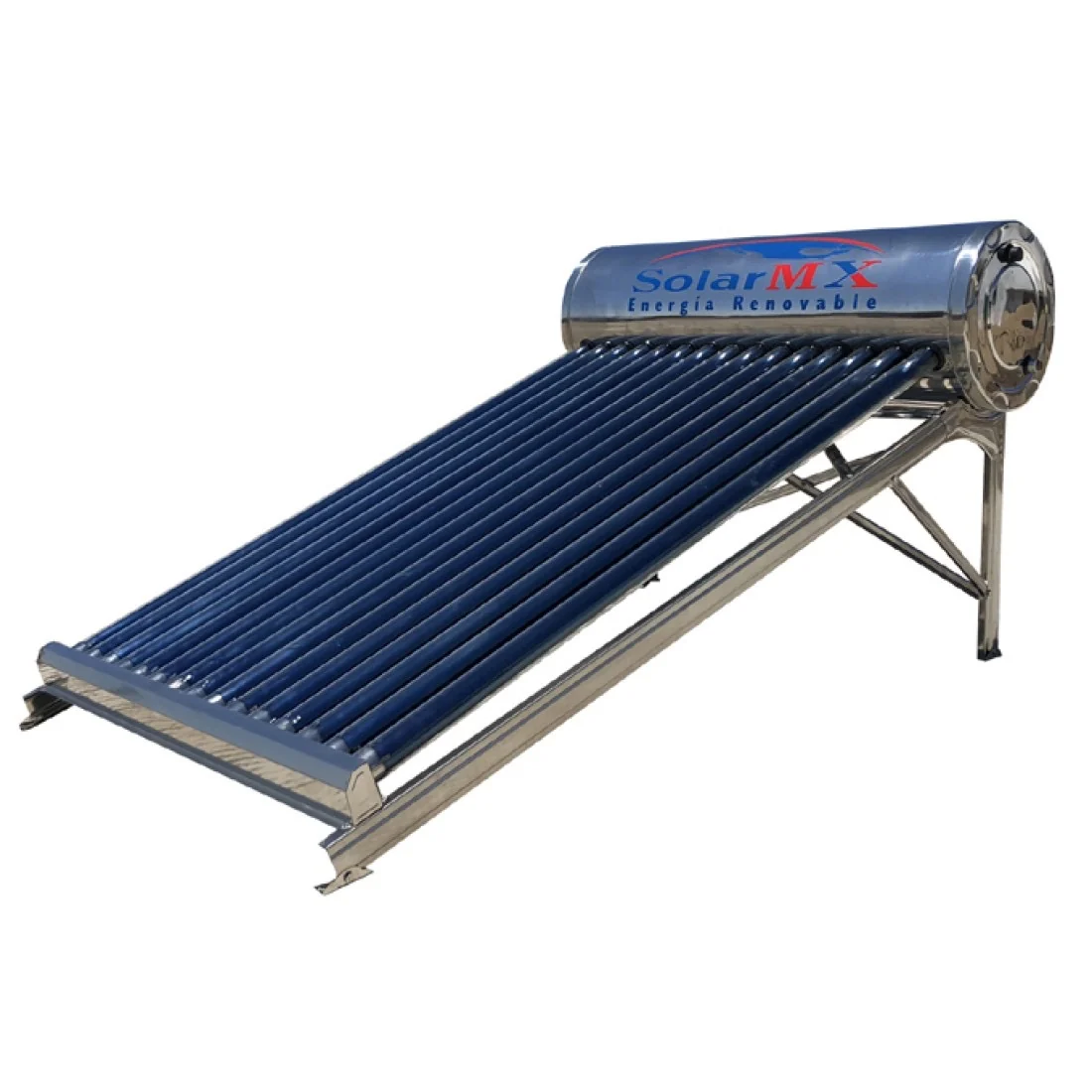
Reliable solar water heating systems that convert solar radiation directly into useful hot water for residential, commercial and institutional applications, reducing conventional energy consumption and operating costs.
SolarBridge bekerjasama dengan pengedar, pemasang, pemaju projek dan rakan pembuatan di seluruh dunia.
Hubungi SolarBridge
Kami pakar dalam reka bentuk dan pembuatan produk terma solar maju, dengan kepakaran kukuh dalam pemanas air solar pra-penukaran haba untuk aplikasi kediaman, komersial dan industri. Kami juga merupakan pembangun pemanas air penyulingan solar BiAGUA dengan paten pelbagai negara, yang juga akan digunakan untuk penyahgaraman solar. Visi kami ialah: “Di mana sahaja terdapat cahaya matahari dan air laut, di situ akan ada air bersih yang mencukupi.”